
In this article
If you searched for gemini characteristics and expected a horoscope (that topic has its own guide to Gemini zodiac personality traits), this page is about something else: Google’s Gemini AI. The gemini characteristics that matter in 2026 are not star-sign traits but practical qualities, such as how the system reads images and video, how much text it can hold in one request, how it reasons through hard problems, and how it plugs into Gmail, Docs, Chrome and the rest of Google’s software.
Pinning those gemini characteristics down is harder than it sounds, because “Gemini” is no longer one model. It is an assistant app, a changing family of models, a developer platform and a layer of integrations, and each layer has its own rules. This guide separates them, so you can tell which trait belongs to which product before you rely on it.
Table of Contents
What Are the Main Gemini Characteristics?
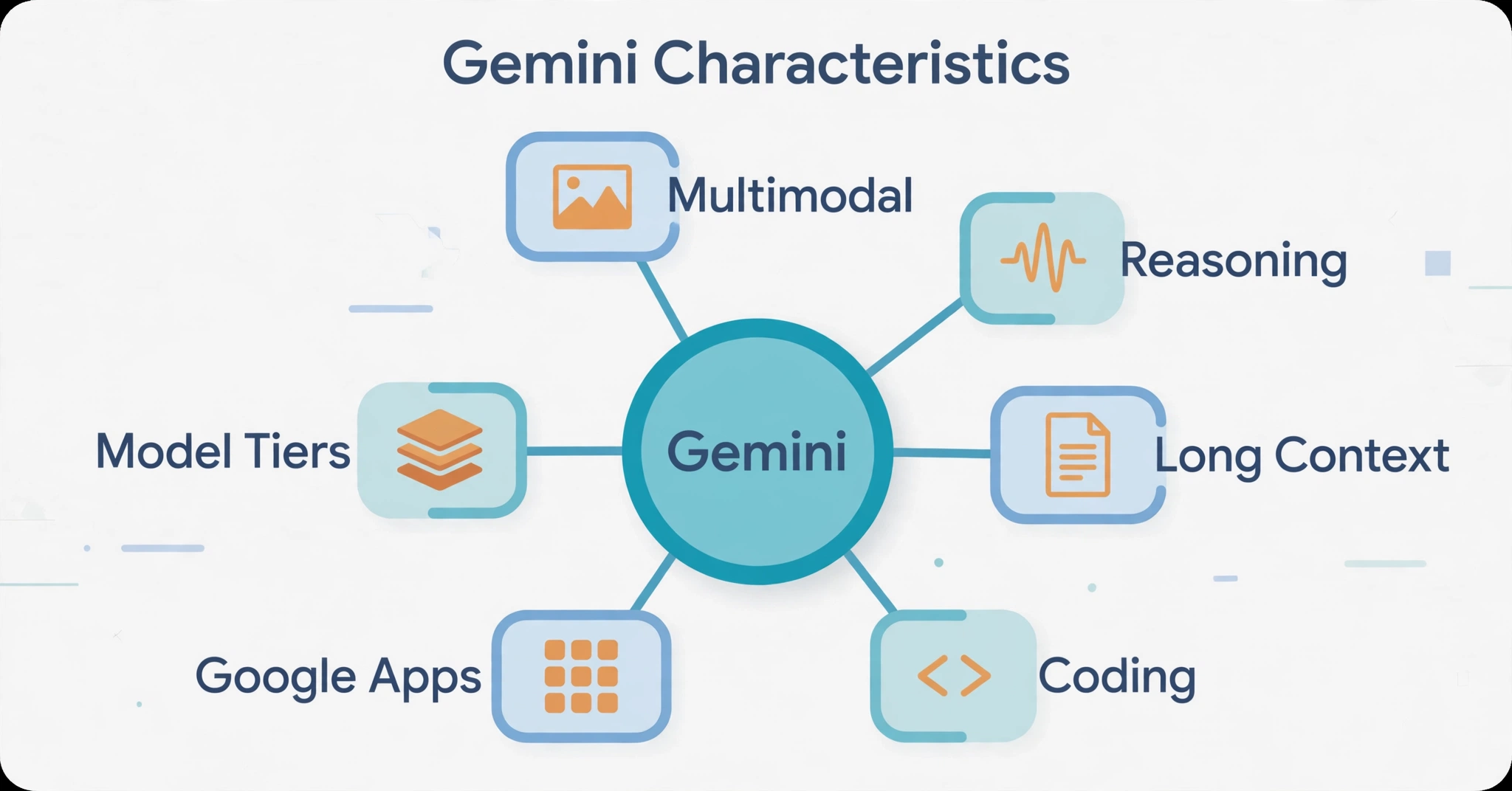
The main gemini characteristics are multimodal input, strong language handling, adjustable reasoning, coding and agent skills, very large context windows on current models, and deep ties to Google’s own apps and Search. Gemini also comes in several model tiers, from fast and cheap to slow and powerful, so the same name can mean very different capability depending on where you use it.
In short, the gemini characteristics that Google documents today are:
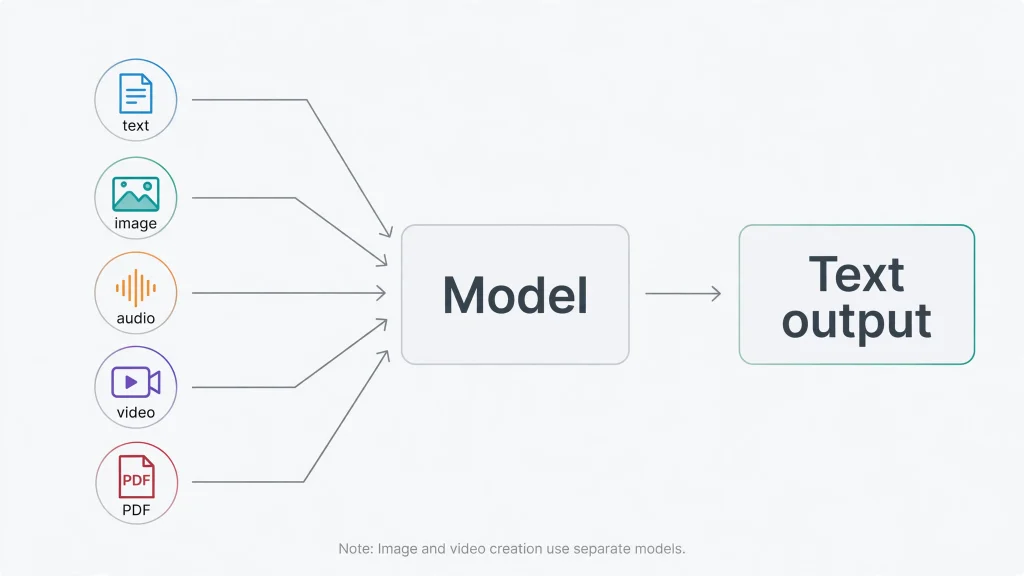
- Multimodal: current flagship models accept text, images, audio, video and PDFs as input.
- Reasoning with a dial: Gemini 4 Argon offers low, medium and high thinking levels.
- Large context: a unified window of about one million tokens on Gemini 4 Argon.
- Coding and tools: function calling, code execution, search grounding and agent features.
- Google integration: Connected Apps, Gemini in Chrome and Workspace features.
- Tiered models and plans: availability depends on model, subscription, region and account type.
One caveat applies to every item above. No single capability is guaranteed across all Gemini models, plans and countries. Treat each statement in this article as true for the product named beside it, not for “Gemini” as a whole.
Which Gemini Are We Talking About?
The word is crowded. The zodiac sign dominates generic searches, and several unrelated products share the name. In this guide, gemini characteristics always refers to Google Gemini AI, the system built by Google DeepMind and shipped through Google products.
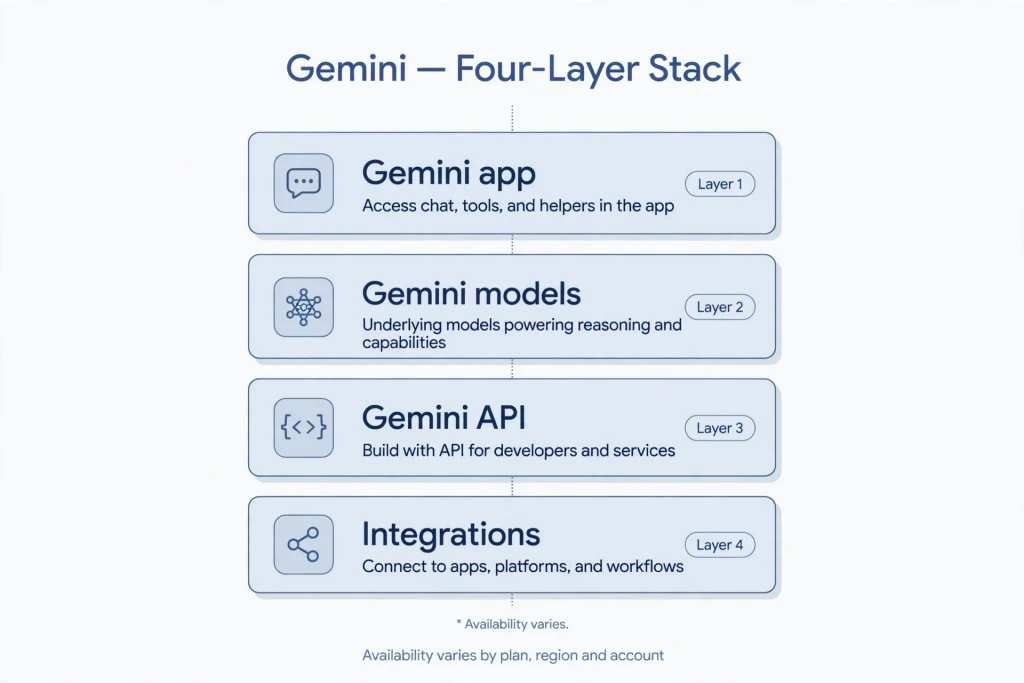
Within Google’s ecosystem, four layers are worth keeping apart:
- The Gemini app. The consumer assistant on the web, on Android and iOS, and in places such as Chrome, Android Auto and Google TV. Google’s privacy documentation lists these surfaces as “Gemini Apps.”
- The Gemini models. The underlying model families, each with an identifier such as
gemini-4-argon, a release date and a lifecycle. - The Gemini API and developer tools. Google AI Studio and the Gemini API for builders, plus Google Cloud’s enterprise agent platform, which replaced Vertex AI branding in 2026.
- Integrations. Gemini inside Workspace apps, connected to your email, files and calendar where your account and settings permit.
Keep this four-layer map in mind. Most confusion about gemini characteristics comes from someone describing the API model while someone else describes the app.
Gemini Characteristics in Detail
1. Multimodal Understanding
The headline among all gemini characteristics is multimodality. Google’s developer documentation describes Gemini models as designed to work with text, images, audio and video from the start, rather than bolting separate tools together. In practice, that means you can hand the model a photo, a recording or a document and ask a question about it in the same request.
The details depend on the model. Google’s page for Gemini 4 Argon lists text, image, video, audio and PDF as inputs, with text as the output. It also states plainly that Argon does not generate images or audio. Creation of pictures and video in the Gemini app comes from other models, which is why “Gemini can do X” can be right in the app and wrong for a specific API model.
2. Text Generation and Understanding
Language work is the everyday core of the gemini characteristics most people meet first. Gemini drafts and rewrites text, summarizes long material, answers questions, compares documents, explains difficult passages and holds a conversation across many turns.
Output quality still depends on the model tier and on how clearly you ask. A fast model suits quick rewrites and short answers; a larger reasoning model is better when the task has several constraints. Specific instructions, such as audience, length and format, tend to matter more than clever phrasing.
3. Image Understanding
Among the visual gemini characteristics, image analysis is the most mature. Supported models can describe a scene, read text in a photo, interpret a chart, compare two pictures or pull structured data from a screenshot.
A practical example: photograph a restaurant receipt and ask for the items as a table, then ask which line looks like a duplicate charge. Gemini can attempt both steps. You should still check the totals yourself, because reading numbers from an image is a place where mistakes slip in.
4. Audio and Video Understanding
Audio and video are where the gemini characteristics set Google apart from older text-first systems. Google’s long-context guide notes that Gemini models were among the first large models able to take audio input directly, which removes the old two-step routine of transcribing speech and then summarizing the transcript.
For Gemini 4 Argon, Google’s documentation lists audio and video as supported inputs and describes agentic video understanding as generally available, with a static default mode. For people rather than developers, the Gemini app adds Gemini Live, a conversational mode on mobile where you can talk and show what your camera sees. Gemini Live exists in the app. The same documentation lists the Live API as not supported by the Argon model, a clean example of app and model differing.
Video creation is a separate branch. Google’s Gemini Omni Flash model takes text, image and short video input and produces video, with documented output lengths of roughly three to ten seconds. Reports indicate it now powers video creation in the Gemini app for paid subscribers, replacing the earlier Veo model there, while Veo remains available to developers.
5. Reasoning
When people list gemini characteristics, “reasoning” usually means the model works through intermediate steps before answering. Gemini 4 Argon exposes this as a thinking level you can set to low, medium or high. Low spends fewer tokens and answers faster; high spends more and is meant for hard mathematics, science and difficult code.
This is engineering, not mind-reading. Reasoning here means the system generates and evaluates intermediate steps to improve answers on complex tasks. It does not mean the model thinks like a person, understands the way you do, or has experiences. It can reason its way to a confident wrong answer, which is why verification still matters.
6. Coding and Agent Skills
Coding is one of the gemini characteristics Google emphasizes most for developers. The Gemini 4 Argon page positions it for complex software engineering, multi-step autonomous agents and long outputs. Listed supported features include function calling, structured outputs, code execution, file search and computer use.
Two developer-facing details are worth noting. First, a single response can run far past the old 64K-token ceiling through “long decode,” which Google documents as reaching up to roughly one million tokens when run in the background. Second, the same page says explicit context caching is not supported on Argon, while implicit caching is. Details like these are the reason developers should read the model page, not a summary article.
7. Long Context
Large context is among the best-known gemini characteristics. Google’s long-context guide explains that many Gemini models offer windows of one million tokens or more, and gives scale comparisons: about fifty thousand lines of code, or around eight average English novels.
On Gemini 4 Argon, the window is unified. Input, thinking and output tokens all draw from the same pool of 1,048,576 tokens, and the default synchronous output cap is 65,536. Do not copy that figure onto every Gemini model. Older and smaller models have different limits, and the consumer app can apply its own limits that vary by plan.
Long context is not a guarantee of perfect recall either. Google’s own guidance acknowledges that retrieving several separate facts from a huge input is less reliable than finding a single one, and advises placing your question after the material you provide.
8. Google Ecosystem Integration
For many readers, this is the most practical of the gemini characteristics. Google’s privacy hub describes Connected Apps, including Google Workspace and Google Photos, so Gemini can look things up in your email or images when you allow it. Gemini also appears in Chrome, Android Auto, Google TV, Google Messages in certain locations, Android XR and on macOS.
Two cautions come straight from Google’s documentation. Some Connected Apps, including Workspace, are unavailable when the Keep Activity setting is off. And a work or school account may follow different data-handling terms than a personal one. Integration is real, but it depends on account type, region and settings.
9. Tools, Search and Web Capabilities
The last of these gemini characteristics is the ability to act beyond plain text. In the API, Gemini 4 Argon supports grounding with Google Search and Google Maps, URL context, code execution and function calling. In the app, Deep Research plans a multi-step investigation, searches the web and writes a report; Google upgraded it in 2026 with a more demanding “Max” option, according to reviewers who tested it.
Tasks in Gemini, formerly known as Spark, can use a remote browser and remote computer to complete jobs for you. Google’s own privacy notes warn that Gemini can make mistakes, including unintended purchases or sharing data, and tell users to supervise those sessions closely.
Gemini Models: An Ecosystem, Not One Static Model
A reader arriving from a 2023 article would learn that Gemini means Ultra, Pro and Nano. Those names describe the original launch. Today the naming pairs a generation number with a codename or tier, and the lineup shifts every few months. That is one more of the gemini characteristics: the model names are not stable, so dated articles mislead.
As of mid-November 2026, Google’s own pages show this picture:
- Gemini 4 Argon (
gemini-4-argon): Google’s flagship reasoning model for the API, aimed at software engineering, math, science and long agent runs. Not available on the API free tier. Introductory pricing runs through November 30, 2026, after which the published rates double. - Gemini 4 Carbon: a higher tier above Argon for the hardest tasks. Google DeepMind’s models page announces it as now available, and Google Cloud’s lifecycle table lists it from November 10, 2026. Reports describe a phased rollout, with paying Ultra subscribers first in the Gemini app, so check your own account before assuming access.
- Gemini 3.8 Flash: the current Flash model, released September 2, 2026, built for speed and everyday volume. Google Cloud also lists a Live variant for low-latency voice.
- Gemini Omni: a separate branch for video generation and conversational editing.
- Image models: the Nano Banana line handles image creation and editing.
- Specialized models: the family also stretches to robotics research.
Lifecycles are short. Google Cloud’s table listed an older Gemini 2.5 Pro for retirement on October 20, 2026, and Gemini 3.6 Flash for November 19, 2026. If you build on a model ID, plan for replacement, because gemini characteristics tied to a specific model name expire when that model does.
Gemini App vs Gemini Models vs Gemini API
Why do the gemini characteristics you read about sometimes differ from what a friend sees on their own screen? Because each layer applies its own limits.
| Layer | What it is | Why capabilities differ |
|---|---|---|
| Gemini app | Consumer assistant on web, mobile and other surfaces | Plan (free or paid Google AI tiers), region, age, personal vs work account |
| Gemini models | The engines, such as Argon or Flash | Each model has its own inputs, outputs, limits and lifecycle |
| Gemini API | Tools for developers | Pricing tier, available regions, and per-model features such as caching |
| Integrations | Gemini inside Google apps | Admin settings, Connected Apps permissions and account type |
Google’s consumer plans, Google AI Plus, Pro and Ultra, raise usage limits and unlock extra features, and Google keeps changing what each tier includes. Because the details move quickly, check Google’s current plan page before paying for a specific feature.
What Makes Gemini Different From Other AI Models?
Be careful with “best.” Benchmarks change monthly, and a leaderboard win on one test says little about your task. The more reliable question is which gemini characteristics are structurally distinctive.
- Native multimodality. Audio, video, images and documents are first-class inputs on current flagship models rather than add-ons.
- Google distribution. Gemini sits inside Search features, Chrome, Android and Workspace, so it can reach the places many people already work.
- Search grounding. Developers can ground answers in Google Search and Google Maps results.
- Context scale. A million-token window on the flagship API model supports whole-codebase and long-document workflows.
- Breadth of the family. One vendor offers reasoning, fast, live-voice, video and image models.
- Developer surface. Google AI Studio, the Gemini API and Google Cloud give a path from prototype to enterprise deployment.
None of these makes Gemini automatically better at your particular job. They describe design choices, not guaranteed outcomes.
Gemini Use Cases
The gemini characteristics above translate into everyday work in specific ways:
- Research and learning. Use Deep Research to build a first-pass report, then verify the sources it cites. Students can ask for explanations at different levels.
- Writing and brainstorming. Draft, restructure and tighten copy; generate angles for a project.
- Document analysis. Upload a long PDF and ask for a summary, a comparison of sections or a list of obligations.
- Image analysis. Read a handwritten note, interpret a diagram or compare product photos.
- Coding. Explain unfamiliar code, write tests, refactor, or run agent workflows through the API and Google’s developer tools.
- Planning and productivity. Draft emails, outline presentations and organize notes, where the relevant Workspace integration is available to you.
- Business workflows. Extract fields from invoices, triage support images, summarize meetings from recordings.
- Creative work. Create and edit images and short videos in the app, within the limits of your plan. If you want to try image creation, our list of Gemini birthday prompts for women shows a prompt formula you can adapt.
For anything that lives in the app, confirm the feature appears in your account. For anything that lives in the API, confirm the model’s documented capabilities.
Limitations of Gemini
Understanding the gemini characteristics also means knowing where they stop.
- Hallucinations. Google’s own privacy documentation says language-model experiences can present inaccurate information as fact.
- Context limits are not perfect recall. A million tokens fit does not mean every detail is retrieved correctly.
- Feature fragmentation. Capabilities differ by model, plan, region, platform and account type. Gemini Live is app-side; the Live API is separate and unsupported on Argon.
- Moving targets. Model names, plan contents and prices change; an article from last spring can be wrong today.
- Access friction. Argon is not offered on the API free tier, and top-tier models like Carbon may roll out gradually.
- Privacy tradeoffs. Consumer chats may be reviewed by trained humans when activity saving is on (see below).
- Safety restrictions. Google’s policies can cause refusals or altered answers on sensitive topics, and some users find the filters overly cautious.
- Bias. Like any model trained on human text, Gemini can reflect skewed patterns, so important judgments need human review.
Gemini Safety, Privacy and Accuracy
However impressive the gemini characteristics look on paper, treat every Gemini answer as a draft that needs checking. Hallucinations happen when a model produces fluent text that is not anchored in fact; they are more likely with obscure topics, precise numbers, citations and recent events. If an answer includes a quotation, statistic, legal point or medical claim, confirm it against a primary source.
Google’s own guidance says not to rely on Gemini Apps for diagnosis, treatment, or legal, financial or other professional help. Use it to prepare questions for a professional, not to replace one.
On privacy, Google’s Gemini Apps Privacy Hub is the authority. For a step-by-step walkthrough of viewing, deleting and auto-deleting your history, see our guide to Gemini Apps Activity and the Keep Activity setting. The main points from Google’s documentation are specific:
- A subset of chats is reviewed by human reviewers, including trained reviewers from service providers, and Google asks users not to enter confidential information they would not want a reviewer to see.
- When Keep Activity is on, chats are saved in your activity, with auto-delete defaulting to 18 months. Chats that human reviewers have already examined are retained for up to three years and are not removed when you delete your activity.
- With Keep Activity off, or in a temporary chat, chats are still held for 72 hours so Gemini can respond and for safety and feedback purposes.
- Google states that Gemini chats are not used to show ads, and says it would clearly communicate any change.
- Work and school accounts may follow different terms, so check your organization’s policy.
Safety systems also shape what you see. Google applies content policies, and its documentation describes safeguards against malicious content and prompt injection. Expect occasional refusals or hedged answers on risky subjects.
Who Should Use Gemini?
The gemini characteristics fit different people differently.
- Students: explanations, study aids and document summaries. Check facts before submitting work.
- Writers and content creators: drafting, restructuring and image or video creation inside the app.
- Developers: Argon’s reasoning, long output, tool use and the Gemini API; test thinking levels on your own workload.
- Researchers: Deep Research for orientation, long context for reading many papers, careful source checking afterwards.
- Professionals and businesses: Workspace integration and enterprise controls, with administrator-managed data settings.
- Everyday users: the free app covers many daily questions; upgrade only if you hit a limit that matters to you.
Gemini is not the right choice for every task. Highly regulated decisions, anything needing guaranteed accuracy, and confidential material that cannot be shared all call for a different approach or additional controls.
Gemini Characteristics vs ChatGPT
The question people ask next is whether these gemini characteristics beat ChatGPT. The honest answer is that it depends on which products and models you compare, and the comparison is dated the moment it is published. As of early November 2026, comparisons note that both companies run new flagship generations and sell similar mid-tier subscriptions, so price alone rarely decides it.
- Multimodality: both handle images and documents; Gemini leans heavily on native audio and video input and has a dedicated video creation model.
- Ecosystem: Gemini connects naturally to Google accounts and Workspace. ChatGPT fits better for people living outside Google’s ecosystem.
- Coding: both are strong. Benchmark leaders vary by test and month, so run your own task.
- Research and search: Gemini can ground answers in Google Search; both offer research tools.
- Context: Gemini 4 Argon’s one-million-token window is a documented feature; check each product’s current limits.
- Model variety and availability: both offer several tiers, and both change often.
The practical test: pick three real tasks from your week, run them on both, and keep the one that needs less correction. That tells you more than any list of gemini characteristics.
Final Thoughts on Gemini Characteristics
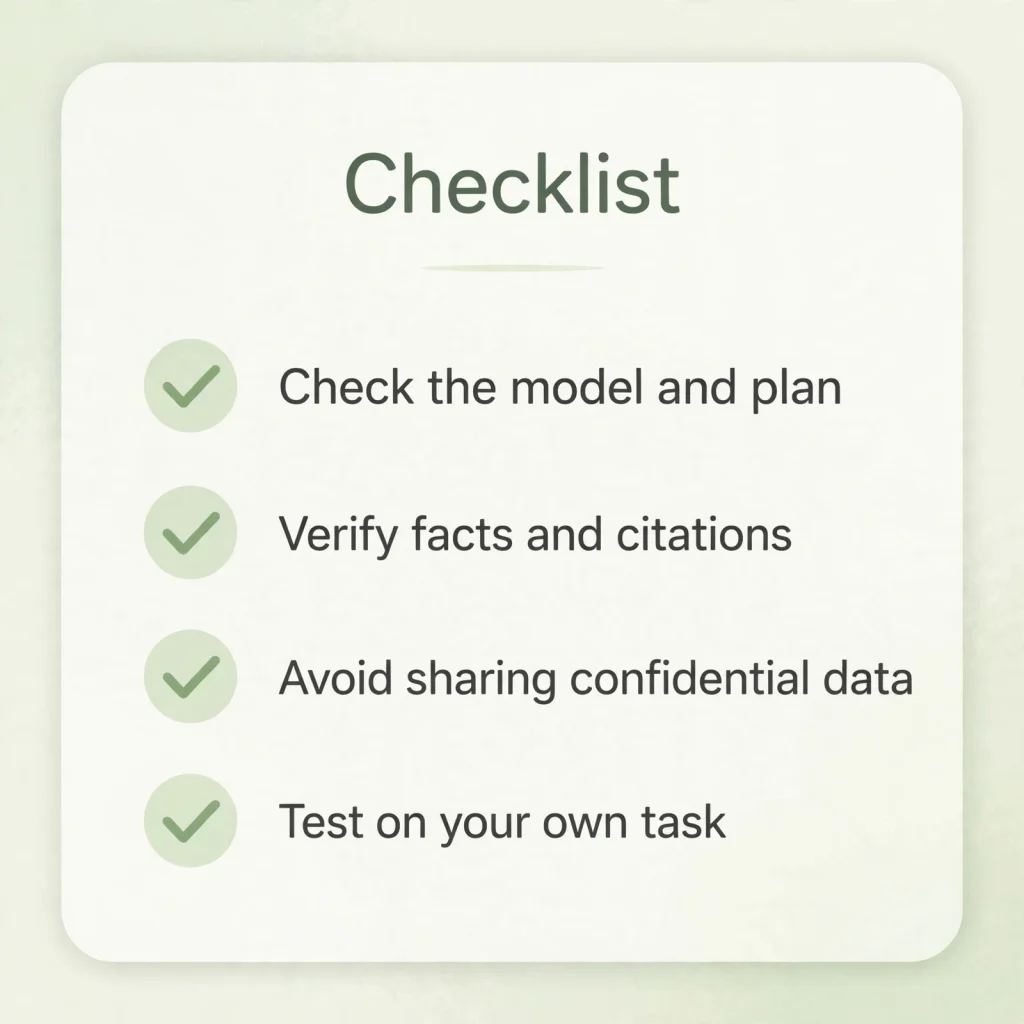
The most useful way to read gemini characteristics is as a checklist you apply per product, not a single score for “Gemini.” Ask which layer you are using (app, model, API or integration), which model sits behind it, what your plan and region allow, and what Google’s documentation says today. Answer those four questions and the gemini characteristics stop being marketing and become something you can plan around.
Frequently Asked Questions About Gemini Characteristics
What are the main Gemini characteristics?
The main gemini characteristics are multimodal input (text, images, audio, video and PDFs on current flagship models), adjustable reasoning, long context, coding and tool use, and integration with Google products. Exact support varies by model, plan and region.
What makes Google Gemini different from other AI models?
Its notable traits are native multimodality, a large context window on the flagship API model, grounding in Google Search and Maps, and tight integration with Google’s apps. These are design differences, not proof that Gemini wins every task.
Is Gemini a multimodal AI?
Yes. Google designs Gemini models to work across text, images, audio and video. Gemini 4 Argon, for instance, accepts text, image, video, audio and PDF input but returns text only.
Can Gemini analyze images?
Yes. Supported models can describe images, read text in them, interpret charts and compare pictures. Verify numbers and small details, since reading errors still occur.
Can Gemini understand video?
Supported models can. Google lists video as an input for Gemini 4 Argon and offers agentic video understanding. Separate models, such as Gemini Omni Flash, focus on creating and editing video.
Can Gemini write and generate code?
Yes. Coding is a major focus. Gemini 4 Argon supports code execution and function calling, and Google positions it for software engineering and agent tasks. Review and test all generated code before using it.
Does Gemini work with Google apps?
Yes, where your account and settings allow. Connected Apps include Google Workspace and Google Photos, and Gemini appears in Chrome and several other Google products. Some integrations are unavailable when Keep Activity is off or on certain work accounts.
What are the limitations of Gemini?
The key gemini characteristics to watch on the downside are hallucinations, uneven feature availability, imperfect long-context recall, privacy tradeoffs with human review, safety-related refusals and fast-changing model names and plans.
Is Gemini better than ChatGPT?
Neither is better for everyone, and no list of gemini characteristics settles it alone. The right choice depends on your tasks, current model versions, existing tools and budget. Test both on a few real tasks.
Which Gemini model should I use?
In the app, use the default unless you hit its limits. For API work, Gemini 4 Argon suits complex reasoning and coding, while a Flash model such as Gemini 3.8 Flash suits speed and volume. Always check the model page for current capabilities, since gemini characteristics differ model by model.
Sources & References
- Google AI for Developers, What’s new in Gemini 4 Argon (page updated October 27, 2026).
- Google AI for Developers, Gemini 4 Argon model page (updated October 30, 2026).
- Google AI for Developers, Long context.
- Google Gemini Apps Help, Gemini Apps Privacy Hub (updated October 26, 2026).
- Google Cloud Documentation, Model versions and lifecycle, Gemini Enterprise Agent Platform.
- Google DeepMind, Models overview.
- Google AI for Developers, Gemini Omni Flash model page.
- Jetstream, Google launches Gemini 4 Carbon (secondary report, November 11, 2026).
- Tom’s Guide, Gemini isn’t just a chatbot anymore: 13 things it can do in 2026.
- Tech Insider, Gemini vs ChatGPT plan by plan (secondary comparison, November 2026).
 Daniel Carter